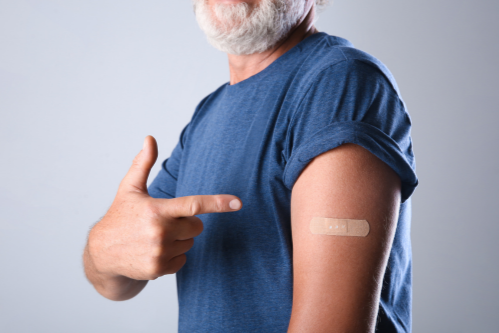
The process by which a person becomes protected against a particular disease is called immunization. Immunity can be acquired actively or passively.
Active immunity results from the body's exposure to a certain antigen, stimulating the production of antibodies. It can be acquired naturally in the course of an infection, i.e. when we are ill, or induced through vaccination. In both situations, if the individual comes into contact with the disease again in the future, their immune system will recognize it and immediately produce antibodies to fight it. This type of immunity can sometimes last a lifetime.
Passive immunity results from the transfer of antibodies from another person. Examples include the transfer of maternal antibodies to the newborn through breastfeeding, or the administration of certain drugs, called immunoglobulins. Although passive immunization provides immediate protection, it is short-lived.
Vaccines are medicines prepared from infectious agents (viruses or bacteria), or the genetic information contained in them, in order to stimulate our bodies to produce an immune response against one or more infectious diseases. Vaccination is one of the simplest, most effective and safest ways of preventing various communicable diseases.
Vaccines teach the immune system to create antibodies that protect you against the disease, similar to what happens when you are naturally exposed to one. However, as vaccines only contain non-infectious forms of the pathogen, they do not cause the disease or put you at risk of developing complications from it.
By using the body's natural defenses to provide protection, they reduce the risk of developing the disease. By receiving a vaccine, the immune system is stimulated in order to:
The vaccine is therefore a safe way of producing an immune response in the body without developing the disease. In some cases, this protection is lifelong, while in others additional doses of the vaccine may be needed to maintain immunity (called booster doses).
Vaccination saves millions of lives every year by preventing diseases such as diphtheria, tetanus, whooping cough, polio, flu or measles. By getting vaccinated, you protect yourself and those around you by preventing preventable diseases from spreading in your community. How many more
people are vaccinated, it will be more difficult for the disease to spread to those who cannot be vaccinated, such as people who are ill or have a weakened immune system.
There are different types of vaccine. In their development, factors such as how the immune system responds to the infectious agent, which population needs to be vaccinated, and the best method of manufacturing the vaccine are taken into account.
As with other medicines, vaccines can also have some side effects. However, it should be noted that the side effects of vaccines are generally mild and self-limiting, i.e. they disappear without the need for treatment. More serious complications, such as anaphylactic reactions, are rare.
The most common side effects are
As is advised for adverse reactions to other medicines, if you suspect an adverse reaction possibly related to vaccination you should notify the National Pharmacovigilance System (SNF).
This notification can be made electronically on the Adverse Drug Reaction (ADR) Notification Portal or by communicating it to the SNF via alternative means of contact, such as telephone, e-mail or post. If possible, you should also inform the treating doctor and the person responsible for vaccination.
If you have any questions about the notification or have difficulty registering it, your pharmacist will be able to help you.
You can find out more about Pharmacovigilance here.
The National Vaccination Program (PNV), which has been in force since 1965, aims to guarantee free access to the vaccines included in it and is aimed at everyone in Portugal.
Its aim is to protect individuals and the population in general against diseases that can threaten public and individual health and for which there are effective vaccines. Through vaccination, the aim is to eliminate, control or mitigate the impact of the disease on the community.
The vaccines currently included in the PNV have the capacity to prevent various diseases:
The extra-PNV vaccines, which are not part of this program, are prescribed by the doctor according to his assessment of the individual's context, i.e. their risk of contracting the disease and developing complications from it.
Currently included in this group are the flu vaccine, the COVID-19 vaccine, the chickenpox vaccine, the hepatitis A vaccine, the rotavirus vaccine, the respiratory syncytial virus vaccine and the vaccine against invasive meningococcal disease caused by Neisseria meningitidis of the ACWY groups.
Non-PNV vaccines require a doctor's prescription and can be purchased and administered in community pharmacies. Including pharmacists in the vaccination process allows for wider access, with positive results in vaccination coverage.
In addition to these, the vaccines prescribed in the traveler's consultation are also considered extra-PNV. These are specifically recommended before some international trips. Examples are the yellow fever and typhoid vaccines. In these cases, vaccination can be done at the traveler's appointment and at international vaccination centers, for an associated fee.
Vaccines not included in the PNV can prevent the development of the following diseases:
The extra-PNV vaccines prescribed as part of the traveler's consultation make it possible to prevent diseases such as yellow fever, dengue fever, rabies, cholera or typhoid fever. However, it should be noted that this list is not exhaustive and will always depend on the risk of developing certain diseases, specific to the destination in question.
The vaccines covered by the PNV are currently received at your health center.
Seasonal vaccination against flu and COVID-19 can be done at the following locations:
Your vaccination record shows all the vaccines you have been given, as well as the date of the next vaccination, if applicable. Alternatively, you can consult all this information digitally via the SNS24 app.
Myth: Vaccines contain many dangerous components.
Fact: As with all medicines, the substances included in the composition of vaccines do not compromise the safety of their administration. Their components are present in very small doses, far lower than those to which one is exposed through their presence in the environment.
Myth: Vaccines cause autism and sudden infant death syndrome.
Fact: Vaccines are very safe and most of the adverse reactions that occur are temporary and mild. There is no evidence linking vaccines to the development of autism spectrum disorders or sudden infant death syndrome.
Myth: A child can get sick from a vaccine.
Fact: Most vaccines are inactivated, i.e. they do not contain the infectious agent in its "live" form, making it unlikely to contract the disease from vaccination. Some vaccines contain live organisms and taking them can lead to a mild form of the disease.
Myth: Vaccine-preventable diseases are part of childhood and it's better for the child to have the disease than to acquire immunity through vaccines.
Fact: Vaccine-preventable diseases have several serious complications that can be avoided through immunization. Vaccines stimulate the immune system to produce an immune response similar to natural infection, without causing the disease itself or putting the individual at risk of developing potential complications.
Myth: A child's immune system can only handle so many vaccines.
Fact: Children have a robust immune system and are exposed to countless bacteria and viruses on a daily basis. The bacterial or viral load of a vaccine is negligible compared to this regular exposure.
Myth: When most people are vaccinated and infection rates are low, it is no longer necessary to get vaccinated.
Fact: Vaccination is always necessary, as there is always a part of the population - children, pregnant women, the elderly and people with weakened immune systems - who cannot receive certain vaccines. It is in these situations that herd immunity plays a key role, as vaccinating the majority of the population prevents the disease from spreading, thus protecting the minority who cannot be vaccinated. Thus, if the number of unvaccinated people increases, there will be an increased risk of viruses and/or bacteria spreading. Furthermore, even if a disease is not a threat in Portugal, it may be common in other countries. This is particularly worrying given the increase in international travel.
copyright © Ordem dos Farmacêuticos
________
WITH SHEE'S HELP
Find a multidisciplinary team of health professionals, always with friendly advice, to provide you with safe, close and personalized care.
Register now 👉 here.
Make an appointment with your pharmacist 👉 here.
Discover all the products, at the best prices, all year round, in the online store 🛒.
Life is easier when you're healthy.

 falecomigo@shee.pt
 +351 21 150 54 76
 create account