We don't notice it, but our hair falls out every day. The problem is when too much hair falls out. Learn how to stop and prevent hair loss by protecting your hair from aggression and keeping it healthy.
IN CONSTANT RENEWAL
Of the 100,000 to 150,000 hairs we have on average, we lose between 50 and 100 every day. This is the natural process of hair renewal:
- Anagen - active growth phase: lasts between two and six years. Around 90% of hairs are in this phase;
- Catagenesis - transition phase in which growth stops: lasts one to two weeks.
- Telogenesis - resting phase: lasts two to three months, after which the hair begins to fall out, pushed by new growing hairs.
These three phases coexist in everyone: at any given time, hair is growing, resting and falling out;
WHEN IT'S TOO MUCH
Losing hair is therefore normal. But when hair loss is accentuated, it can be a sign of alopecia - an imbalance in the scalp where more hair is falling out than growing in, thus jeopardizing hair renewal.
There are many factors that can contribute to transient hair loss:
- Hormones - pregnancy and taking oral contraceptives can influence hair loss in women;
- Medicines - such as those used for depression, heart disease and cancer treatment, among others;
- Diseases - such as diabetes, skin diseases, scalp infections or lupus;
- Environment - such as excessive exposure to wind, heat and chlorine in swimming pools;
- Friction - from the intensive use of adornments (rubber bands, hairpins), elaborate hairstyles and excessive brushing.
- Chemical aggression of some products used in hair hygiene and/or use of inappropriate products.
- Inadequate and varied diet, low in protein, vitamins and minerals.
DIFFERENCES IN ALOPECIA
Another factor that can contribute to alopecia is heredity. In this case, alopecia is called androgenetic and affects men and women differently:
- Men - hair thinning, i.e. a decrease in the number of hairs, begins in the lateral areas, near the frontal region, or on the top of the head, continuing backwards, and can develop into baldness.
- Women - the hair becomes thinner and sparser all over the scalp, and the hair loss may be more pronounced at the front, sides or top of the head, but rarely progresses to baldness.
STOPPING THE FALL
For some types of alopecia, there are medicines and health products available at your pharmacy that act on the scalp, stimulating blood circulation and, with it, the active hair growth phase. Ask away!
FOR HEALTHY HAIR
It's always best to be safe by practicing the right hair care:
- Get advice on the best products for your hair type;
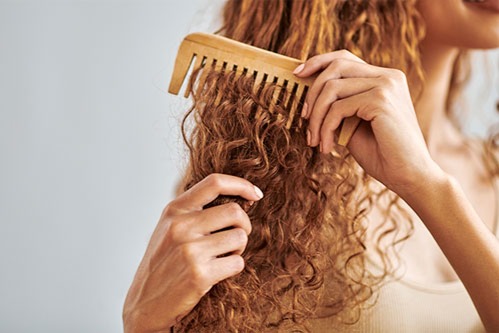
- Brush your hair before shampooing, preferably with a soft, natural bristle brush.
- Wash your hair with lukewarm water;
- Remove excess water before drying; use a hairdryer at a distance of 15 cm and at a medium temperature;
- Avoid adornments (clips and springs) and hairstyles that cause friction to the hair;
- Moderate the use of dyes, perms and straighteners;
- Protect your hair from external aggressions such as wind and too much sun exposure: in the latter case, use hair-specific sunscreens.
- "Feed" your hair: on the outside, with the right products, and on the inside, with a balanced diet;
- Consult a dermatologist if you notice changes in the scalp or the frequency of hair loss.
copyright © by the National Association of Pharmacies
________
WITH SHEE'S HELP
Find a multidisciplinary team of health professionals, always with friendly advice, to provide you with safe, close and personalized care.
Register now 👉 here.
Make an appointment with your pharmacist 👉 here.
Discover all the products at the best prices all year round in the online store 🛒.
Life is easier when you're healthy.

 falecomigo@shee.pt
 +351 21 150 54 76
  create account