What are manipulated medicines?

What are manipulated medicines?

What are manipulated medicines?

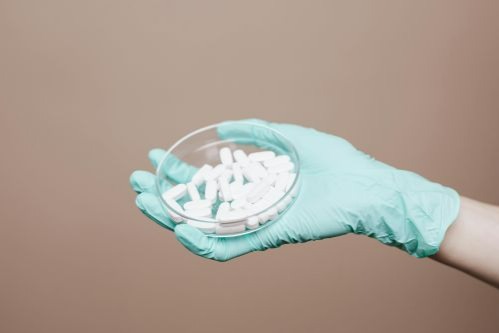
The handling of medicines is defined as a process that encompasses a series of technical operations, consisting of the preparation of a pharmaceutical form - a manipulated medicine, its packaging and quality control, in accordance with specific legislation in order to guarantee the quality, safety and efficacy of all the medicines prepared. 
 
Manipulated medicines can be classified as officinal preparations or magistral formulas. They are prepared and dispensed by community pharmacies or hospital pharmaceutical services, under the responsibility of a pharmacist.
 
An officinal preparation is any medicinal product prepared in accordance with the indications of a pharmacopoeia or a formulary, in a community pharmacy or hospital pharmaceutical service, intended to be dispensed directly to patients assisted by that pharmacy or service.
 
Magistral formulas, on the other hand, are medicines that are manipulated in a pharmacy or hospital pharmacy according to a specific prescription for a specific patient. This type of medicine must be prescribed by a doctor.
 
Manipulated medicines thus make it possible to meet the needs of medicines that are not marketed by the pharmaceutical industry.

In what situations are magistral formulas prescribed?

Magistral formulation makes it possible to individualize medication for each patient, according to each particular situation. The need for manipulation can arise for various reasons, including:
      • Need for dose adjustment. The possibility of adjusting a dose of medication to a person's specific needs, as is particularly the case with children;
      • Association of active substances. The need to combine several active substances in the same formulation, facilitating treatment and improving patient compliance;
      • The required form of administration is not available. Changing the pharmaceutical form to one that makes it easier to take. For example, preparing a medicine that is only marketed in tablet form in the form of a syrup, so that it can be administered to children or adults who have difficulty swallowing;
      • Possibility of removing a component. Removal of an excipient that is part of the composition of a particular marketed medicine that may be causing allergy or intolerance to the patient, preventing them from taking it;
      • The need to adapt organoleptic characteristics. That is, changing the taste and/or aroma of a medicine to promote adherence to treatment, taking into account the individual preferences of each person.

What types of magistral formulas are there?

Magistral formulas can be categorized into two main types: sterile and non-sterile preparations.


PREPARAÇÕES ESTÉREIS

São preparações manipuladas sob rigorosas condições asséticas de forma a garantir a segurança do seu uso em áreas sensíveis do corpo. Estes tipos de formulações incluem as soluções injetáveis, medicamentos oftálmicos ou os inaladores, e são, por norma, preparados nos serviços farmacêuticos hospitalares, uma vez que dispõem das instalações e equipamentos apropriados para garantir as condições de esterilidade necessárias. 


PREPARAÇÕES NÃO ESTÉREIS

São manipulados num ambiente limpo e controlado, mas não sob condições estritas de esterilidade. Este tipo de formulações pode destinar-se a aplicação externa ou ingestão oral, e assumir diversas formas, como por exemplo, cremes, pomadas, loções, cápsulas, papéis medicamentosos ou formulações líquidas orais.

How does the process of formulating medicines take place?

After the consultation, your doctor will prescribe which active substance should make up the medicine that will be manipulated, as well as its concentration, quantity, pharmaceutical form, route of administration and dosage.
 
The prescription must then be handed in by the user at the pharmacy (or hospital pharmaceutical services where applicable) so that it can be prepared by the pharmacist.
 
To guarantee quality and safety in the handling process, your pharmacist works in accordance with the principles of good practice to be observed in the preparation of medicines handled in workshop and hospital pharmacies, in a suitable environment under controlled conditions. A drug preparation sheet is strictly followed, detailing all the information needed to prepare the drug. In addition to the steps to be followed to prepare the magistral preparation, this form also contains other relevant information, such as the production and expiry date, registration number, quality tests carried out and the final acceptance or rejection of the product.

Any doubts you may have about magistral formulas should always be clarified directly with your doctor or pharmacist.
 

copyright © Ordem dos Farmacêuticos

________

WITH SHEE'S HELP 

Find a multidisciplinary team of health professionals, always with friendly advice, to provide you with safe, close and personalized care. 

Register now 👉 here. 

Make an appointment with your pharmacist 👉 here.

Discover all the products, at the best prices, all year round, in the online store 🛒.   

Life is easier when you're healthy.